Home
HomeA Guide to Identity Theft Statistics for 2026


There’s a digital counterpart for nearly everything we do, meaning more of our personal information is stored online. While this convenience simplifies daily life, it also creates more opportunities for cybercriminals to exploit sensitive data. Identity theft occurs when someone uses your personally identifiable information (PII), like credit card numbers or Social Security details, for financial or personal gain.
The good news is that there are steps you can take to lower the risk of identity theft. This article shares the latest fraud statistics and identity theft trends in the U.S., along with practical ways to protect your personal data from cybercriminals.
Identity theft by the numbers
Identity theft remains widespread in the United States. According to the FTC Consumer Sentinel Network Data Book 2024, consumers reported more than 1.1 million cases of identity theft nationwide in 2023, a slight decline from 2022 but still significantly higher than pre-pandemic years.
Fraudulent benefit claims from pandemic-related programs have tapered off, but new forms of digital fraud continue to grow. The Javelin Strategy & Research Identity Fraud Study 2024 found that criminals stole approximately $43 billion from U.S. consumers in 2023, impacting more than 16 million victims.
Here are a few key takeaways from the two recent studies:
- More than 1.1 million identity theft reports were filed with the FTC in 2023.
- Financial losses reached $43 billion in 2023 due to identity fraud.
- Credit card fraud remains the top reported category of identity theft, accounting for 40% of all reports.
- Young adults aged 30–39 continue to be the most targeted demographic for identity theft.
- Over 70% of identity theft victims experienced some form of digital account takeover, including online banking and social media accounts.
These figures demonstrate that identity theft is evolving alongside technology, with a major shift toward digital-account-based fraud.
How common is identity theft in the U.S.?
Despite efforts to strengthen online security, identity theft remains a persistent problem. The FTC recorded nearly five million total fraud and identity-related reports in 2023, with total losses exceeding $10 billion, the highest level on record.
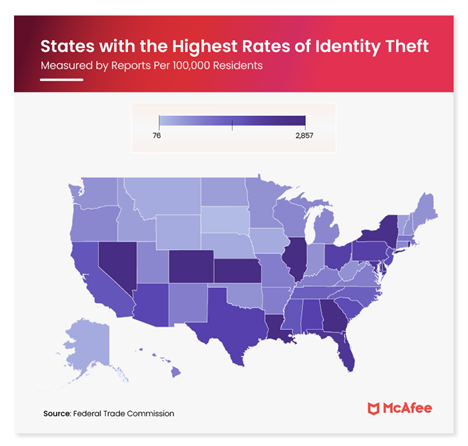
States with the highest per-capita identity theft reports included Georgia, Florida, Maryland, and Nevada. Meanwhile, states like South Dakota and North Dakota consistently reported the fewest cases.
Who are the victims of identity theft?
Identity theft affects every demographic, but the type of fraud often varies by age. Older adults tend to experience benefits and medical identity theft more often, while younger adults are more likely to face credit card and online account fraud.
The FTC reported that consumers in their 30s accounted for nearly 25% of all reported cases in 2023. At the same time, Javelin’s data shows a growing risk among teens and children due to social media oversharing and data breaches in educational institutions.
Types of identity theft
While financial identity theft remains the most reported, other forms are rapidly increasing. Here are the five major types:
- Financial identity theft: Unauthorized use of credit or debit card information for transactions or account openings.
- Medical identity theft: Use of personal data to obtain healthcare services or prescriptions.
- Criminal identity theft: Misuse of someone’s identity during arrests or criminal proceedings.
- Synthetic identity theft: Creation of a fake identity blending real and fabricated data, often used for loans or credit applications.
- Child identity theft: Fraudulent use of a minor’s personal information for financial gain.
What to do if you suspect identity theft
If you suspect your identity has been stolen, act quickly to minimize the damage. Steps include:
- Monitor your accounts: Regularly check bank and credit card statements and monitor your credit report for unusual activity.
- Report the theft: Submit a report to the FTC’s IdentityTheft.gov portal for customized recovery assistance.
- Contact affected companies: Inform your bank, credit card providers, and any business where fraud occurred.
- Place a fraud alert: Reach out to the three major credit bureaus — TransUnion, Experian, and Equifax — to add a fraud alert or credit freeze.
- Seek support: Visit the Identity Theft Resource Center (ITRC) for personalized recovery help.
Protect your information online
Digital fraud is evolving fast, but you can reduce your risk by being proactive. McAfee Identity Protection helps monitor your personal and financial data, offering alerts, recovery tools, and up to $1 million in identity theft insurance. Staying informed and cautious online remains your best defense.
Quick Links

Introducing McAfee+
Identity theft protection and privacy for your digital life
Download McAfee+ Now