


Finding the perfect holiday gift is one thing. Finding it at the right price is another.
And with shoppers searching for deals on everything from the latest gadgets to this year’s must-have toys, scammers have plenty of opportunities to get their attention.
New McAfee research reveals a sharp increase in Americans reporting holiday shopping scams. 42% say they’ve fallen for a holiday shopping scam, up from 22% last year. That’s a 91% year-over-year increase.
At the same time, shoppers are becoming less confident in their ability to recognize fraud. Just 75% of Americans say they can spot an online scam, down from 90% in 2025. Nearly half (48%) say they’ve encountered a holiday deal or advertisement they initially trusted, only to discover it was a scam.
To understand how shoppers are being targeted, McAfee Labs investigated searches for this year’s most popular holiday gifts, identifying products associated with suspicious websites and potentially fraudulent offers. The findings reveal the 12 Scams of Christmas, including popular toys, sneakers, collectibles and gift cards. These are popular gifts where shoppers searching for a deal are more at risk of running into a scam.
In some cases, suspicious activity appeared less than a minute after a search.

Which Brands Are Being Impersonated in Holiday Shopping Scams
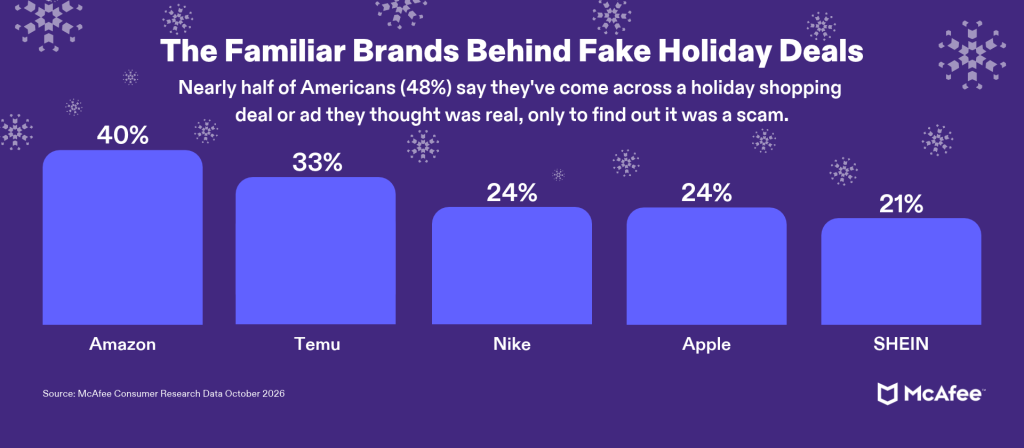
From familiar shopping destinations like Amazon and Temu to sought-after brands like Nike and Apple, scammers use recognizable names to make fraudulent offers appear legitimate.
An Amazon scam, for example, might involve a fake shopping website that looks like the real retailer but is designed to collect payment information instead of fulfilling an order.
When asked which brands they recalled seeing impersonated in suspicious or fraudulent holiday shopping deals, Americans most frequently identified Amazon (40%), Temu (33%), Nike and Apple (24% each), followed by eBay and SHEIN (21% each).
These findings don’t mean the brands themselves are unsafe. Scammers borrow familiar names, logos and product images to make an unfamiliar offer appear trustworthy.
Nearly one-third of Americans (30%) say a retailer appearing to be a recognizable brand could cause them to overlook signs of a potential scam, while 26% say positive customer reviews could have the same effect.
Clothing, shoes and sneakers were the most commonly reported category in Americans’ most recent holiday shopping scams involving financial loss (20%), followed by smartphones and tablets (11%) and gaming consoles and video games (10%). Gift cards, jewelry and watches, toys and collectibles, and headphones and other electronics each accounted for 8%.
To be clear, these figures reflect reported losses, not evidence that the products themselves are unsafe.
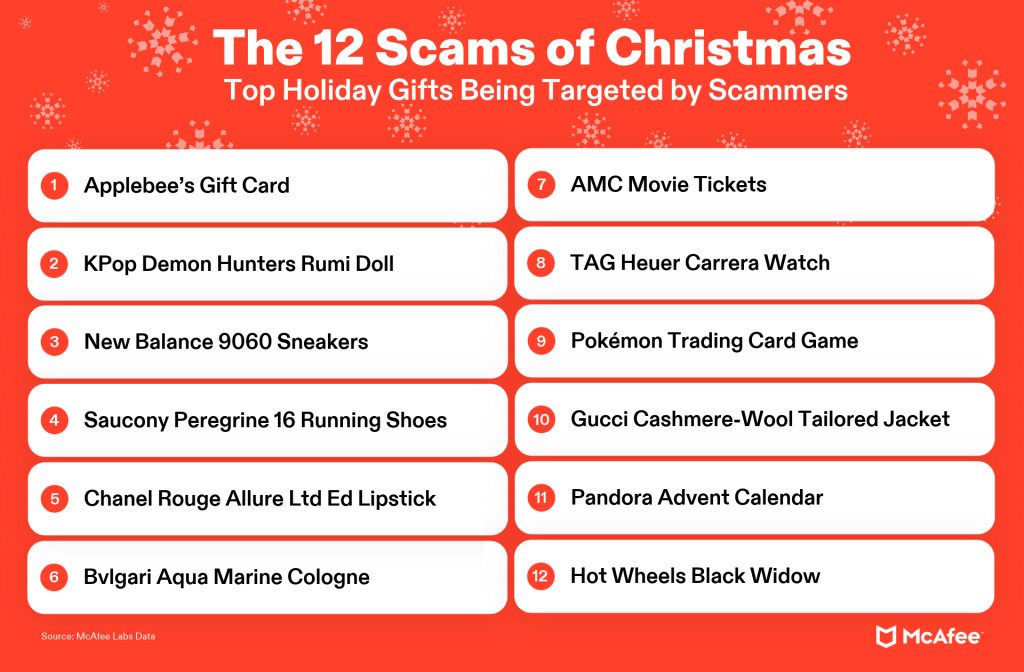
The 12 Scams of Christmas: Which Holiday Gifts Are Scammers Targeting?
Every holiday season brings a new list of must-have gifts. But searching for the perfect present can also lead shoppers to suspicious websites and fraudulent offers.
McAfee Labs analyzed online searches for popular holiday gifts and identified the 12 Scams of Christmas, products that, by no fault of their own, were associated with some of the highest rates of suspicious or malicious website activity following a search.
- Applebee’s Gift Card
- KPop Demon Hunters Rumi Doll
- New Balance 9060 Sneakers
- Saucony Peregrine 16 Running Shoes
- Chanel Rouge Allure 88 Rose Mystery Lipstick
- Bvlgari Aqva Marine Cologne
- AMC Movie Tickets
- TAG Heuer Carrera Watch
- Pokémon Trading Card Game
- Gucci Cashmere-Wool Blend Tailored Jacket
- Pandora Advent Calendar
- Hot Wheels Black Widow
These products aren’t inherently dangerous. The risk comes from fraudulent sellers and suspicious websites using popular gifts to attract shoppers.
“Scammers know which gifts people want, and they use that demand to put convincing fake offers in front of shoppers,” says McAfee Threat Researcher Charles McFarland.
“Whether it’s a hard-to-find collectible or a discounted pair of sneakers, shoppers should take a moment to verify who they’re buying from before entering payment information.”
How Quickly Can Holiday Shopping Searches Lead to Fake Websites?
McAfee Labs found that suspicious or malicious activity could follow searches for popular gifts in a matter of seconds.
For searches involving AMC Theatres, the median time to detected suspicious activity was just 13 seconds, compared with approximately 22 seconds for Applebee’s and 1 minute and 18 seconds for Pandora.
Researchers also uncovered suspicious shopping sites offering sought-after products, including KPop Demon Hunters dolls, popular sneakers and Pokémon trading cards.

One unusual finding involved the Mona Pika, an unofficial, fan-made Pokémon card featuring Pikachu styled after the Mona Lisa. Searches for this collectible were particularly prominent in the Pokémon research, illustrating how niche collectibles and viral products can attract online attention.
The card itself is not necessarily fraudulent, but shoppers looking for rare or unofficial merchandise should verify sellers before purchasing.
Why Holiday Shopping Deals Can Be Too Good to Be True
Finding a bargain is part of the holiday shopping experience, especially during major sales events like Black Friday and Cyber Monday. But the same discounts that make these events appealing can also make fraudulent offers harder to resist.
McAfee’s research suggests that when shoppers think they’ve found a particularly good deal, they may be more willing to overlook the warning signs.
68% of Americans report engaging in at least one potentially risky shopping behavior to secure a better holiday deal.
Nearly one-quarter (23%) purchased from a website they weren’t entirely sure was legitimate, while 22% bought from an unfamiliar retailer. Another 21% purchased from sellers with limited or no reviews, and the same percentage shared personal information to claim a discount.
Nearly one-third of Americans (31%) admit they’ve ignored a scam warning sign because they didn’t want to miss out on a deal. Among those shoppers, the most commonly ignored red flag was an unusually low price (47%), followed by unfamiliar sellers and questionable reviews (37% each).
AI can make these offers more convincing. According to McAfee’s research, 74% of Americans are more concerned about AI-generated scams than they were a year ago, while 70% believe AI-generated holiday scams can appear convincing.
Scammers can use AI to create realistic product images, polished advertisements and messages that imitate legitimate businesses. But the underlying tactics remain familiar: impersonating trusted retailers, offering attractive deals and pressuring shoppers to act quickly.
What Are the Most Common Holiday Shopping Scams?
McAfee found that Americans most frequently encountered suspicious messages involving gift cards or prize offers (49%), package delivery problems (42%) and limited-time deals (32%). Account verification alerts and order confirmations or shipping updates each appeared in 30% of reported experiences, followed by refund notifications at 27%.
Many rely on phishing, a tactic where scammers impersonate trusted businesses to trick people into clicking dangerous links, sharing personal information or making payments.
A shopper expecting a package might receive a text claiming their delivery address needs updating. Someone searching for a popular gift might encounter an advertisement promising an unusually large discount. Both can lead to fraudulent websites designed to collect payment information or steal personal details.
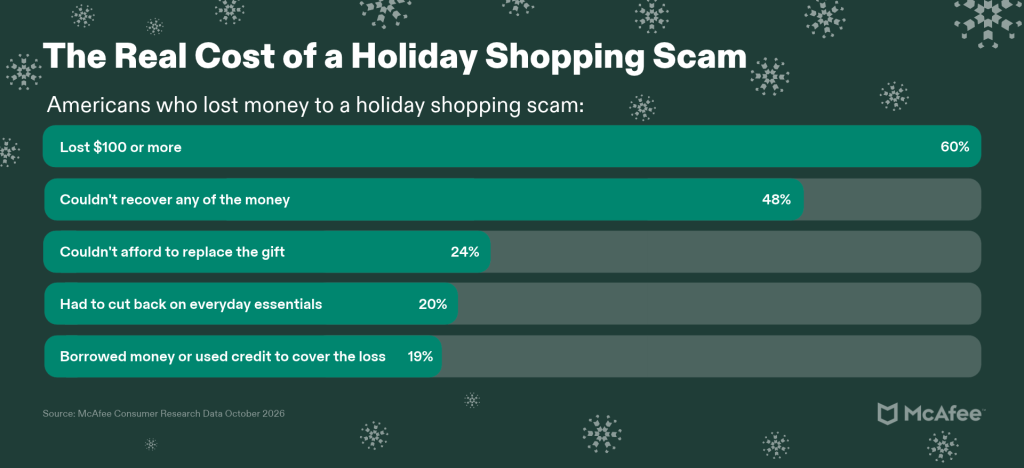
How Much Money Do People Lose to Holiday Shopping Scams?
For many shoppers, the consequences extend well beyond missing out on a gift.
Among Americans who reported losing money to a holiday shopping scam, 60% lost $100 or more, 30% lost at least $250 and 13% lost $500 or more. Nearly half (48%) were unable to recover any of the money they lost.
The financial consequences can extend beyond the original purchase. Among Americans who experienced a holiday shopping scam, 31% had to spend additional money replacing a gift, while 24% couldn’t afford to replace it.
Another 20% reported cutting back on everyday essentials, and 19% borrowed money or used credit to cover the loss.
How to Avoid Holiday Shopping Scams and Fake Shopping Websites
Avoiding holiday scams doesn’t mean giving up online shopping or missing out on good deals. A few practical habits can help shoppers recognize suspicious offers before making a purchase.
- Check the seller, not just the brand. Before buying, check the web address for misspellings, look for clear contact and return information, and research unfamiliar sellers. If you’re unsure, visit the brand’s official website directly rather than following an ad or unfamiliar link.
- Compare prices before buying. If a popular gift is dramatically cheaper than everywhere else, investigate the offer before entering payment information.
- Don’t let urgency make the decision. Countdown timers, limited-stock warnings and expiring deals can encourage rushed purchases.
- Verify unexpected messages. Check delivery notifications, refunds and account alerts through official websites or apps rather than clicking unsolicited links.
- Protect your accounts and payments. Use unique passwords, enable multifactor authentication and choose payment methods with fraud protections.
Key Takeaway
Holiday shopping scams are getting harder to recognize, but a good deal shouldn’t require taking a gamble. Verify unfamiliar sellers, check offers directly with retailers and think twice before sharing payment information.
McAfee can help with those checks. McAfee’s new all-in-one experience brings together tools like Scam Detector and web protection, with proactive alerts and clear, easy-to-understand guidance to help you spot potential scams and know what to do next.
Scam Detector helps identify suspicious messages and links, while Web Protection helps block dangerous websites. And when new devices are unwrapped, Device Security helps protect them against malware and other online threats.
About the Research
McAfee 2026 Consumer Holiday Shopping Research
McAfee’s holiday shopping research was conducted in October 2026 among 6,000 adults across the United States, United Kingdom, France, Germany, Japan and Australia, including 1,000 U.S. respondents. Year-over-year comparisons are based on a separate McAfee survey conducted in August 2025. The surveys used different research providers and sample sizes.
McAfee Labs Global Holiday Shopping Research
McAfee Labs analyzed online scam activity across popular holiday gift categories, identifying fraudulent shopping sites, brands being impersonated and how quickly suspicious or malicious activity could appear following searches for popular gifts.
Final Labs methodology and product rankings pending confirmation.
Frequently Asked Questions About Holiday Shopping Scams
Q: How can I tell if a shopping website is safe or a scam?
Look closely at the website’s address, especially for misspellings or unusual variations of familiar retailer names. Check for clear contact information, return policies and independent customer reviews. Be wary of unusually low prices or sellers pushing you to pay through gift cards, wire transfers or cryptocurrency. And remember, a padlock icon doesn’t guarantee a website is legitimate.
Q: Can you get scammed on Amazon?
Yes. While Amazon is a legitimate retailer, scammers can impersonate the company through fake websites, fraudulent messages and package delivery alerts. Scams can also involve dishonest third-party sellers. If you receive an unexpected message about an order, payment or delivery, check your account directly through the Amazon app or official website rather than clicking the link.
Q: How do I report a scam website?
In the U.S., you can report suspected scam websites to the Federal Trade Commission at ReportFraud.ftc.gov. You can also report phishing websites through Google Safe Browsing. If the site is impersonating a familiar retailer, consider reporting it to that company, too.
Q: What should I do if I’ve been scammed online?
Act quickly. Contact your bank or payment provider if you’ve shared payment information or sent money. Change any passwords that may have been compromised, watch your accounts for suspicious activity and report the incident to the FTC. If you downloaded anything suspicious, run a security scan on your device.
Q: Can I get my money back after an online shopping scam?
It depends on how you paid. Credit card purchases may offer stronger dispute protections, while money sent through gift cards, wire transfers or cryptocurrency can be harder to recover. Contact your bank or payment provider as soon as possible to ask about reversing or disputing the transaction. Keep receipts, messages and other records that could support your claim.
Stay Updated
Follow us to stay updated on all things McAfee and on top of the latest consumer and mobile security threats.