Scams don’t always arrive with obvious warning signs.
They show up as QR codes on parking meters. As casual DMs that start with “Hey.” As social messages that feel routine enough to respond to without thinking twice.
That shift has created a new burden for consumers. According to McAfee’s 2026 State of the Scamiverse report, Americans now spend 114 hours a year trying to figure out what’s real and what’s fake online. That is nearly three full workweeks lost to second-guessing messages, alerts, links, and notifications.
McAfee’s upgraded Scam Detector is designed to meet people in those exact moments, with enhancements rolling out across core McAfee plans beginning in February.
The latest improvements add instant QR code scam checks and smarter social messaging protection, making it easier to spot scams before they escalate.
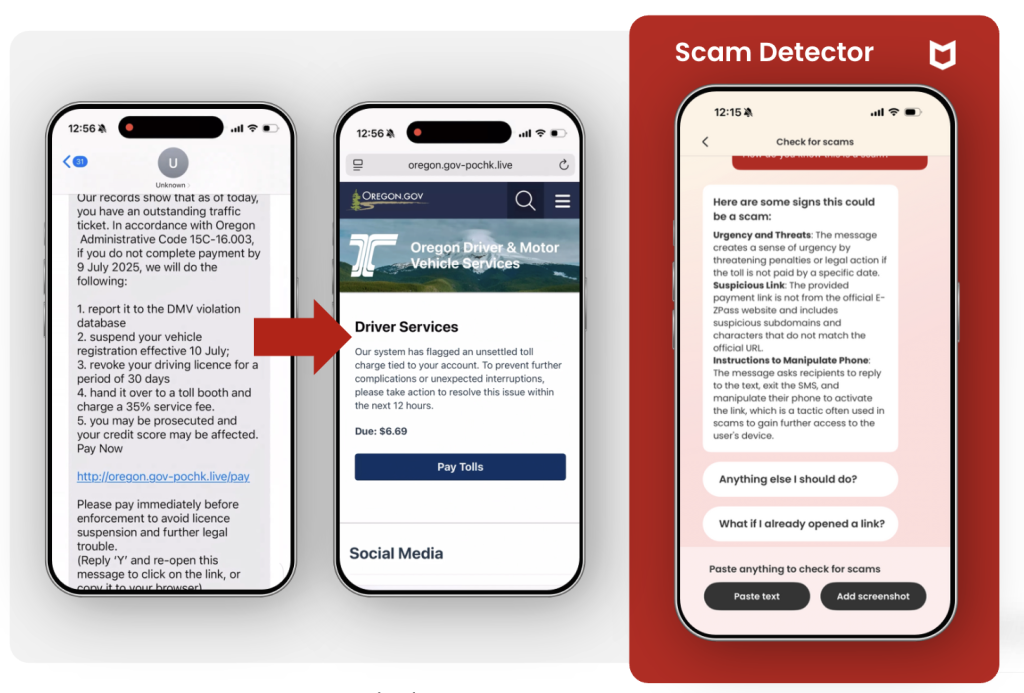
Figure 1: An example of a suspicious text being flagged by McAfee’s Scam Detector
What’s new in McAfee’s Scam Detector
Scams now move quickly across platforms and formats, often escalating in minutes once someone engages. Among people who were harmed by a scam, the typical scam unfolded in about 38 minutes.
That speed leaves little room for hesitation. Scam protection has to work in real time, not after the damage is done.
McAfee’s latest Scam Detector upgrades are designed around that reality, adding:
- Instant QR code safety checks, so users can assess risk before tapping
- Smarter social messaging protection, with clearer warnings for suspicious texts, emails, and DMs, even when no link is present
These Scam Detector upgrades will begin rolling out in February across all core McAfee plans, bringing real-time protection to the moments where scams escalate fastest.
QR codes, quishing, and why instant scans are needed
QR codes were designed for convenience. That is exactly why scammers use them.
Cybercriminals increasingly hide malicious links behind QR codes placed on menus, parking meters, packages, posters, and public signage. People scan quickly, often without stopping to evaluate where the code leads.
McAfee research shows how common this risk has become:
- 68% of people scanned a QR code in the past three months
- 18% landed on a suspicious or unsafe page after scanning
- Among those who did, more than half took risky actions such as entering personal information, installing an app, or connecting a digital wallet
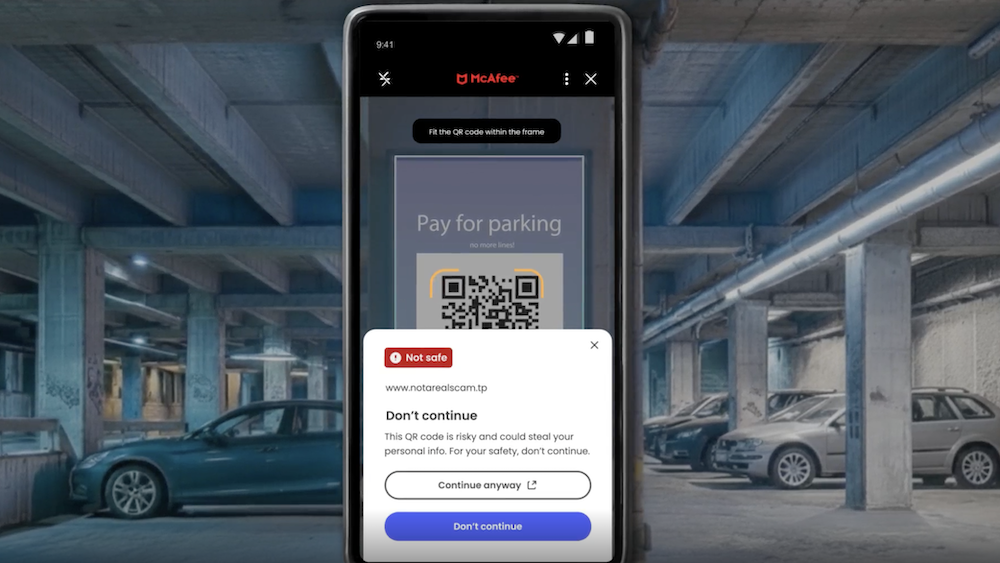
Figure 2. A still from a demo video, showing a risky QR code being blocked by McAfee’s Scam Detector
Social media scams and the rise of linkless messages
Phishing is no longer confined to emails with obvious red flags.
Scams now arrive through WhatsApp, Instagram, Messenger, Telegram, and other social platforms, often starting as vague or friendly messages designed to lower suspicion rather than trigger alarm.
McAfee’s research highlights a key shift: more than one in four suspicious social messages contain no link at all, and 44% of Americans say they have replied to a suspicious DM with no link.
These messages rely on familiarity and momentum. A short greeting. A warning about an account issue. A promise of easy money. By the time a request or link appears, the conversation already feels normal.
And the economic impact of these scams is significant. According to the FTC, social media scams drove $1.9 billion in reported losses in 2024, making social platforms one of the top channels for fraud and identity theft.
That’s why McAfee’s Scam Detector includes smarter social messaging protection, delivering clearer warnings for suspicious texts, emails, and DMs, even those without risky links, across popular platforms. The focus is on identifying suspicious patterns and behavior, not just URLs.
Users can take a quick screenshot of their social media content on social media, and McAfee’s Scam Detector will analyze the message for suspicious activity.
Get protection that works before scams escalate
The stakes are high:
- One in three Americans has lost money to a scam
- Among those who lost money, the average loss was $1,160
- 15% of scam victims fall for another scam within a year
Scams are not just increasing in volume. They are becoming more personal, more believable, and easier to scale using AI.
McAfee’s upgraded Scam Detector is designed to stay ahead of those shifts, offering real-time guidance when it matters most, whether that’s a suspicious QR code, a vague DM, or a message that feels just normal enough to trust.
The enhanced Scam Detector, including instant QR code checks and smarter social messaging protection, will begin rolling out in February across all core McAfee plans.