No matter where you live in the U.S., AI-driven scams and deceptive content are increasingly filling our feeds, alerts, and inboxes with moments that make us stop and ask: “Is this real?”
But the scams and threats Americans encounter aren’t the same everywhere. Where you live can shape the types of scams reaching your devices, how often you encounter them, and even how those experiences affect the way you behave online.
This 50-state breakdown combines McAfee consumer research with McAfee Labs data to show how Americans are experiencing scams, how those experiences are affecting trust and behavior online, and which text-based scams are reaching devices across the country.
The consumer findings come from a nationally representative survey of 5,000 U.S. adults, with 100 respondents in each state. The survey explores people’s exposure to scams, financial losses, changing online behaviors, concerns about AI and the mental effort involved in deciding what to trust online.
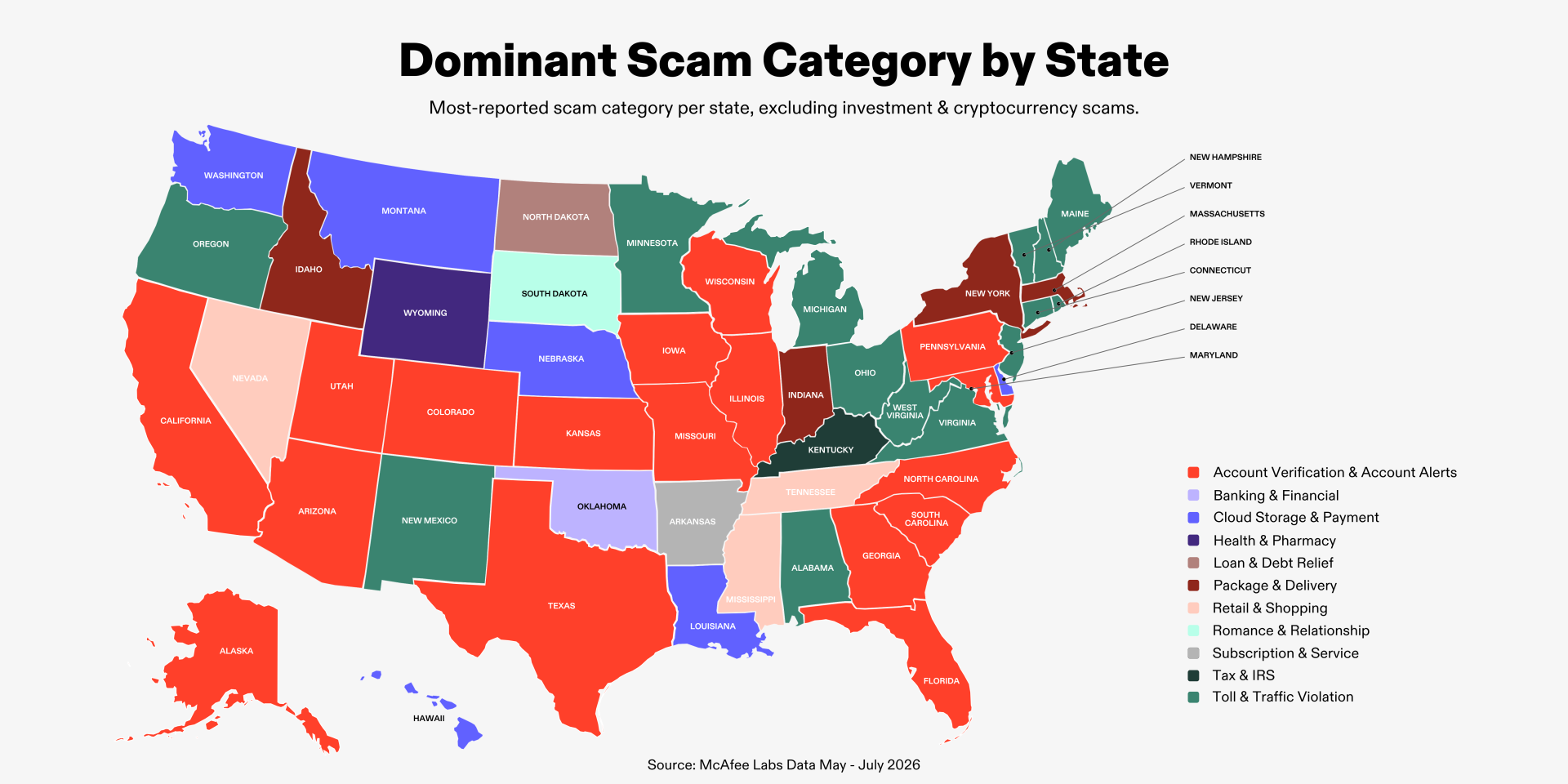
Alongside those findings, McAfee Labs analyzed text-based scam activity across the U.S. from May through July 2026. That data provides a view into the volume, concentration and types of scam texts McAfee observed in each state during the three-month analysis period.
Together, the two datasets offer different views of the same problem: what people say they are experiencing and how it affects them, alongside the scam activity McAfee is seeing in the wild.
Alabama
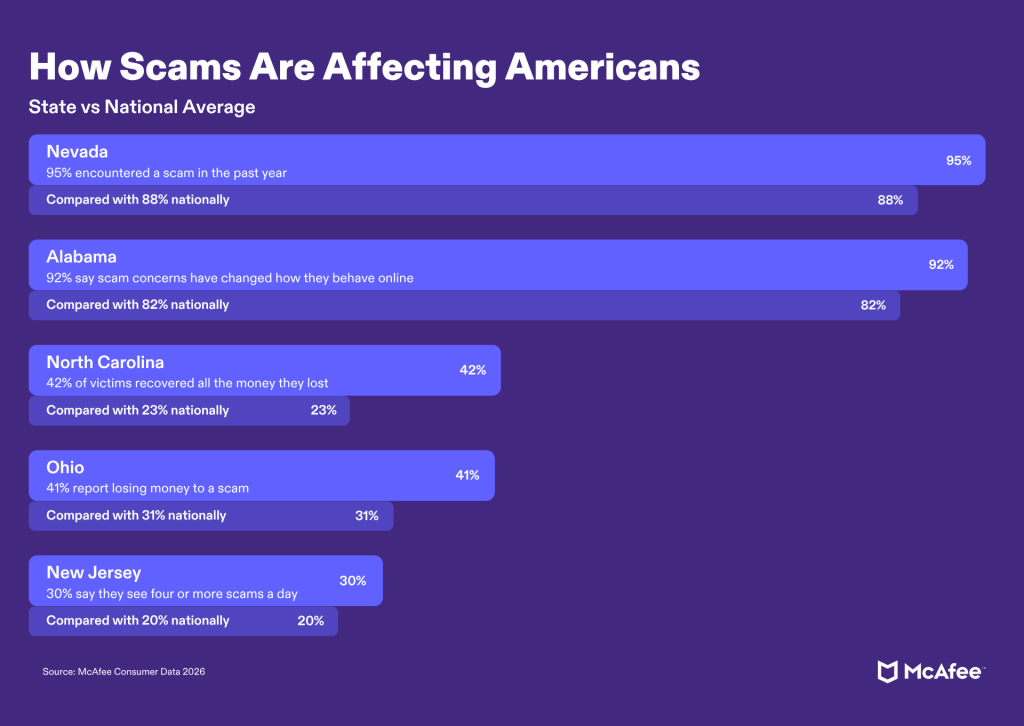
Key takeaway: Alabama had the highest scam-text rate per device in McAfee’s analysis, while scam concerns are also changing how residents behave online.
- 66% say figuring out what’s real online takes more mental energy than it did a year ago.
- 60% check whether something online is legitimate at least weekly.
- 19% say they do that checking several times a day.
- 45% have encountered an AI-generated image presented as real.
- 83% are concerned AI is making scams harder to recognize.
- 64% have avoided an unfamiliar retailer because of scam concerns.
- 42% have ignored a legitimate call, text or email because they feared a scam.
- 41% have avoided trying a new app, website or service.
- 39% have avoided clicking a legitimate message or link.
- Investment and cryptocurrency scams were the leading text-scam category detected in Alabama.
McAfee detected 5.14 scam texts per device, the highest rate in the country.
Alaska
Key takeaway: Alaska has one of the widest gaps between rising trust fatigue and active checking: 54% report more mental effort, but only 44% verify online content at least weekly.
- 54% say figuring out what’s real online takes more mental energy than a year ago.
- 44% check online legitimacy at least weekly.
- 13% say they check several times a day.
- 44% have encountered an AI-generated image presented as real.
- 82% are concerned AI is making scams harder to recognize.
- 48% have avoided an unfamiliar retailer.
- 39% have ignored a legitimate call, text or email.
- 40% have avoided trying a new app, website or service.
- 34% have avoided clicking a legitimate message or link.
Investment and cryptocurrency scams were the leading text-scam category detected in Alaska.
Arizona
Key takeaway: Arizonans are feeling a pronounced trust burden, with 65% saying it now takes more mental energy to decide what’s real online.
- 65% report greater mental effort figuring out what’s real online.
- 60% check online legitimacy at least weekly.
- 17% check several times a day.
- 41% have encountered an AI-generated image presented as real.
- 81% are concerned AI is making scams harder to recognize.
- 43% have avoided unfamiliar retailers.
- 44% have ignored a legitimate call, text or email.
- 31% have avoided trying a new app, website or service.
- 39% have avoided clicking a legitimate message or link.
Investment and cryptocurrency scams led Arizona’s text-scam volume.
Arkansas
Key takeaway: Arkansas residents are relatively active verifiers: 64% check online legitimacy at least weekly even though only about half report greater mental strain.
- 51% say figuring out what’s real online takes more mental energy.
- 64% verify online content at least weekly.
- 22% check several times a day.
- 38% have encountered an AI-generated image presented as real.
- 77% are concerned AI is making scams harder to recognize.
- 46% have avoided unfamiliar retailers.
- 42% have ignored a legitimate call, text or email.
- 32% have avoided trying a new app, website or service.
- 32% have avoided clicking a legitimate message or link.
Investment and cryptocurrency scams led Arkansas text-scam volume.
California
Key takeaway: California has one of the heaviest trust burdens in the survey: 72% say figuring out what’s real online now takes more mental energy.
- 72% report greater mental effort deciding what’s real online.
- 58% verify online content at least weekly.
- 20% check several times a day.
- 41% have encountered an AI-generated image presented as real.
- 83% are concerned AI is making scams harder to recognize.
- 49% have avoided unfamiliar retailers.
- 43% have ignored a legitimate call, text or email.
- 32% have avoided trying a new app, website or service.
- 38% have avoided clicking a legitimate message or link.
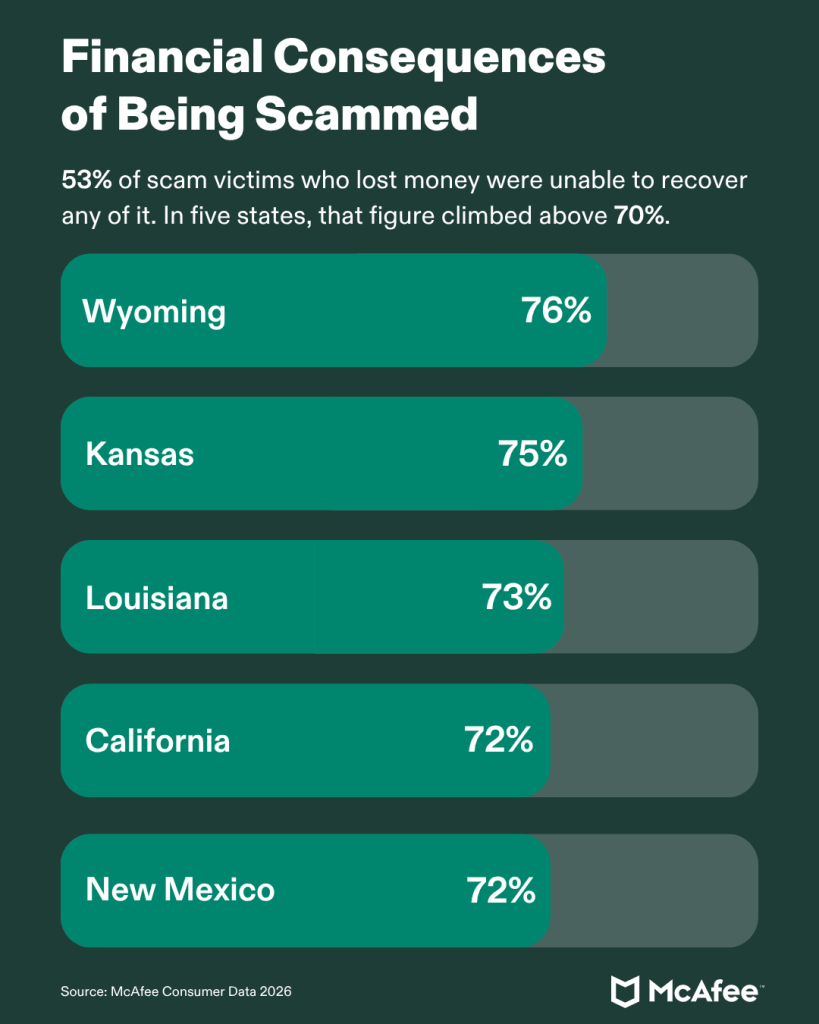
- Among Californians surveyed who lost money to scams, 72% recovered none of it.
Investment and cryptocurrency scams led California’s text-scam volume.
Colorado
Key takeaway: Colorado’s clearest signal is concern about AI-enabled scams, shared by 85% of residents surveyed.
- 59% report greater mental effort figuring out what’s real online.
- 56% verify online content at least weekly.
- 15% check several times a day.
- 38% have encountered an AI-generated image presented as real.
- 85% are concerned AI is making scams harder to recognize.
- 42% have avoided unfamiliar retailers.
- 45% have ignored a legitimate call, text or email.
- 35% have avoided trying a new app, website or service.
- 34% have avoided clicking a legitimate message or link.
Investment and cryptocurrency scams led Colorado’s text-scam volume.
Connecticut
Key takeaway: Connecticut residents report rising trust fatigue, yet fewer than half say they verify online content every week.
- 57% say figuring out what’s real takes more mental energy.
- 47% verify online content at least weekly.
- 18% check several times a day.
- 35% have encountered an AI-generated image presented as real.
- 79% are concerned AI is making scams harder to recognize.
- 33% have avoided unfamiliar retailers.
- 36% have ignored a legitimate call, text or email.
- 26% have avoided a new app, website or service.
- 24% have avoided clicking a legitimate message or link.
Investment and cryptocurrency scams led Connecticut’s text-scam volume.
Delaware
Key takeaway: Delaware stands out for exposure to synthetic imagery, with 46% encountering an AI-generated image presented as real.
- 53% report greater mental effort figuring out what’s real online.
- 53% verify online content at least weekly.
- 8% check several times a day.
- 46% have encountered an AI-generated image presented as real.
- 80% are concerned AI is making scams harder to recognize.
- 47% have avoided unfamiliar retailers.
- 34% have ignored a legitimate call, text or email.
- 30% have avoided a new app, website or service.
- 33% have avoided clicking a legitimate message or link.
Investment and cryptocurrency scams led Delaware’s text-scam volume.

Scams? Not your problem.
We spot suspicious texts, emails, and videos for you.
Florida
Key takeaway: Floridians are active online reality-checkers, with 63% verifying messages, offers, websites or people at least weekly.
- 56% report greater mental effort figuring out what’s real online.
- 63% verify online content at least weekly.
- 18% check several times a day.
- 43% have encountered an AI-generated image presented as real.
- 85% are concerned AI is making scams harder to recognize.
- 43% have avoided unfamiliar retailers.
- 37% have ignored a legitimate call, text or email.
- 42% have avoided a new app, website or service.
- 27% have avoided clicking a legitimate message or link.
Investment and cryptocurrency scams led Florida text-scam volume.

Georgia
Key takeaway: Georgia had the second-highest scam-text-per-device rate highlighted by McAfee, at 4.67.
- 59% report greater mental effort figuring out what’s real online.
- 60% verify online content at least weekly.
- 25% check several times a day.
- 33% have encountered an AI-generated image presented as real.
- 80% are concerned AI is making scams harder to recognize.
- 40% have avoided unfamiliar retailers.
- 37% have ignored a legitimate call, text or email.
- 27% have avoided a new app, website or service.
- 35% have avoided clicking a legitimate message or link.
- McAfee detected an average of 4.67 scam texts per device.
Investment and cryptocurrency scams led Georgia’s text-scam volume.
Hawaii
Key takeaway: Hawaii had the country’s highest scam intensity among affected devices: those receiving at least one scam text averaged 8.45 over three months.
- 56% report greater mental effort figuring out what’s real online.
- 54% verify online content at least weekly.
- 13% check several times a day.
- 38% have encountered an AI-generated image presented as real.
- 81% are concerned AI is making scams harder to recognize.
- 47% have avoided unfamiliar retailers.
- 38% have ignored a legitimate call, text or email.
- 37% have avoided a new app, website or service.
- 37% have avoided clicking a legitimate message or link.
- Affected devices averaged 8.45 scam texts, the highest figure nationally.
Investment and cryptocurrency scams led Hawaii’s text-scam volume.
Idaho
Key takeaway: Idaho shows a sizeable trust gap: 62% report greater mental effort deciding what’s real, while 49% verify online content weekly.
- 62% report more mental effort figuring out what’s real online.
- 49% verify online content at least weekly.
- 13% check several times a day.
- 43% have encountered an AI-generated image presented as real.
- 82% are concerned AI is making scams harder to recognize.
- 48% have avoided unfamiliar retailers.
- 35% have ignored a legitimate call, text or email.
- 40% have avoided a new app, website or service.
- 38% have avoided clicking a legitimate message or link.
Investment and cryptocurrency scams led Idaho’s text-scam volume.
Illinois
Key takeaway: Two-thirds of Illinois residents say deciding what’s real online is taking more mental energy than a year ago.
- 66% report more mental effort figuring out what’s real online.
- 59% verify online content at least weekly.
- 18% check several times a day.
- 39% have encountered an AI-generated image presented as real.
- 75% are concerned AI is making scams harder to recognize.
- 40% have avoided unfamiliar retailers.
- 26% have ignored a legitimate call, text or email.
- 32% have avoided a new app, website or service.
- 24% have avoided clicking a legitimate message or link.
Investment and cryptocurrency scams led Illinois text-scam volume.
Indiana
Key takeaway: Indiana’s scam anxiety is translating into caution: 81% are concerned about AI making scams harder to recognize and 60% verify online content weekly.
- 62% report more mental effort figuring out what’s real online.
- 60% verify online content at least weekly.
- 18% check several times a day.
- 46% have encountered an AI-generated image presented as real.
- 81% are concerned AI is making scams harder to recognize.
- 38% have avoided unfamiliar retailers.
- 41% have ignored a legitimate call, text or email.
- 35% have avoided a new app, website or service.
- 35% have avoided clicking a legitimate message or link.
Investment and cryptocurrency scams led Indiana text-scam volume.
Iowa
Key takeaway: Iowa residents report relatively restrained checking behavior: 47% verify online content at least weekly despite 55% reporting greater mental effort.
- 55% report more mental effort figuring out what’s real online.
- 47% verify online content at least weekly.
- 17% check several times a day.
- 33% have encountered an AI-generated image presented as real.
- 81% are concerned AI is making scams harder to recognize.
- 43% have avoided unfamiliar retailers.
- 32% have ignored a legitimate call, text or email.
- 33% have avoided a new app, website or service.
- 34% have avoided clicking a legitimate message or link.
Investment and cryptocurrency scams led Iowa text-scam volume.
Kansas
Key takeaway: Kansas has one of the bleakest recovery pictures in the survey: 75% of scam victims who lost money recovered none of it.
- 61% report more mental effort figuring out what’s real online.
- 51% verify online content at least weekly.
- 10% check several times a day.
- 40% have encountered an AI-generated image presented as real.
- 80% are concerned AI is making scams harder to recognize.
- 42% have avoided unfamiliar retailers.
- 39% have ignored a legitimate call, text or email.
- 40% have avoided a new app, website or service.
- 32% have avoided clicking a legitimate message or link.
- 75% of victims who lost money said they recovered none of it.
Investment and cryptocurrency scams led Kansas text-scam volume.
Kentucky
Key takeaway: Kentucky is the standout verification state: 76% say they check whether online content is legitimate at least weekly.
- 62% report more mental effort figuring out what’s real online.
- 76% verify online content at least weekly.
- 19% check several times a day.
- 41% have encountered an AI-generated image presented as real.
- 83% are concerned AI is making scams harder to recognize.
- 46% have avoided unfamiliar retailers.
- 30% have ignored a legitimate call, text or email.
- 39% have avoided a new app, website or service.
- 25% have avoided clicking a legitimate message or link.
Investment and cryptocurrency scams led Kentucky text-scam volume.
Louisiana
Key takeaway: Louisiana combines comparatively low trust fatigue with severe financial consequences: 73% of victims who lost money recovered none of it.
- 45% report more mental effort figuring out what’s real online.
- 54% verify online content at least weekly.
- 13% check several times a day.
- 35% have encountered an AI-generated image presented as real.
- 75% are concerned AI is making scams harder to recognize.
- 43% have avoided unfamiliar retailers.
- 37% have ignored a legitimate call, text or email.
- 32% have avoided a new app, website or service.
- 30% have avoided clicking a legitimate message or link.
- 73% of victims who lost money said they recovered none of it.
Investment and cryptocurrency scams led Louisiana text-scam volume.
Maine
Key takeaway: Maine is one of only two states where toll and traffic scams, rather than investment and crypto scams, ranked first in McAfee’s text telemetry.
- 64% report more mental effort figuring out what’s real online.
- 59% verify online content at least weekly.
- 13% check several times a day.
- 39% have encountered an AI-generated image presented as real.
- 81% are concerned AI is making scams harder to recognize.
- 46% have avoided unfamiliar retailers.
- 34% have ignored a legitimate call, text or email.
- 34% have avoided a new app, website or service.
- 30% have avoided clicking a legitimate message or link.
Toll and traffic violation scams were Maine’s leading text-scam category.
Maryland
Key takeaway: Marylanders show particularly high concern about AI-enabled fraud, with 86% saying AI is making scams harder to recognize.
- 65% report more mental effort figuring out what’s real online.
- 60% verify online content at least weekly.
- 25% check several times a day.
- 45% have encountered an AI-generated image presented as real.
- 86% are concerned AI is making scams harder to recognize.
- 46% have avoided unfamiliar retailers.
- 45% have ignored a legitimate call, text or email.
- 37% have avoided a new app, website or service.
- 44% have avoided clicking a legitimate message or link.
Investment and cryptocurrency scams led Maryland text-scam volume.
Massachusetts
Key takeaway: Massachusetts has a striking trust gap: 65% report more mental effort deciding what’s real, but only 48% verify online content at least weekly.
- 65% report more mental effort figuring out what’s real online.
- 48% verify online content at least weekly.
- 15% check several times a day.
- 46% have encountered an AI-generated image presented as real.
- 86% are concerned AI is making scams harder to recognize.
- 47% have avoided unfamiliar retailers.
- 35% have ignored a legitimate call, text or email.
- 37% have avoided a new app, website or service.
- 38% have avoided clicking a legitimate message or link.
Investment and cryptocurrency scams led Massachusetts text-scam volume.
Michigan
Key takeaway: Michigan joins Maine as the only state where toll and traffic scams outranked investment and cryptocurrency scams.
- 71% report more mental effort figuring out what’s real online.
- 52% verify online content at least weekly.
- 21% check several times a day.
- 43% have encountered an AI-generated image presented as real.
- 71% are concerned AI is making scams harder to recognize.
- 40% have avoided unfamiliar retailers.
- 35% have ignored a legitimate call, text or email.
- 34% have avoided a new app, website or service.
- 32% have avoided clicking a legitimate message or link.
Toll and traffic violation scams were Michigan’s leading text-scam category.
Minnesota
Key takeaway: Minnesota records the highest AI-scam concern in the state crosstabs, at 91%.
- 60% report more mental effort figuring out what’s real online.
- 59% verify online content at least weekly.
- 10% check several times a day.
- 47% have encountered an AI-generated image presented as real.
- 91% are concerned AI is making scams harder to recognize.
- 44% have avoided unfamiliar retailers.
- 44% have ignored a legitimate call, text or email.
- 38% have avoided a new app, website or service.
- 34% have avoided clicking a legitimate message or link.
Investment and cryptocurrency scams led Minnesota text-scam volume.
Mississippi
Key takeaway: Mississippi had one of the heaviest scam-text loads in McAfee’s analysis, averaging roughly 4.64 scam texts per device.
- 55% report more mental effort figuring out what’s real online.
- 54% verify online content at least weekly.
- 17% check several times a day.
- 32% have encountered an AI-generated image presented as real.
- 82% are concerned AI is making scams harder to recognize.
- 43% have avoided unfamiliar retailers.
- 34% have ignored a legitimate call, text or email.
- 34% have avoided a new app, website or service.
- 35% have avoided clicking a legitimate message or link.
- McAfee detected roughly 4.64 scam texts per device.
Investment and cryptocurrency scams led Mississippi text-scam volume.
Missouri
Key takeaway: Missouri residents show a confidence problem around AI scams: 13% said they were not at all confident spotting AI-created or AI-enhanced fraud.
- 63% report more mental effort figuring out what’s real online.
- 60% verify online content at least weekly.
- 16% check several times a day.
- 41% have encountered an AI-generated image presented as real.
- 85% are concerned AI is making scams harder to recognize.
- 43% have avoided unfamiliar retailers.
- 40% have ignored a legitimate call, text or email.
- 39% have avoided a new app, website or service.
- 35% have avoided clicking a legitimate message or link.
- 13% said they’re not at all confident they could spot a scam enhanced by AI
Investment and cryptocurrency scams led Missouri text-scam volume.
Montana
Key takeaway: Montana has the highest reported exposure to AI-generated images presented as real, at 51%.
- 63% report more mental effort figuring out what’s real online.
- 49% verify online content at least weekly.
- 11% check several times a day.
- 51% have encountered an AI-generated image presented as real.
- 84% are concerned AI is making scams harder to recognize.
- 47% have avoided unfamiliar retailers.
- 44% have ignored a legitimate call, text or email.
- 43% have avoided a new app, website or service.
- 37% have avoided clicking a legitimate message or link.
Investment and cryptocurrency scams led Montana text-scam volume.
Nebraska
Key takeaway: Nebraska’s strongest signal is AI concern: 87% say AI is making online scams harder to recognize.
- 56% report more mental effort figuring out what’s real online.
- 50% verify online content at least weekly.
- 8% check several times a day.
- 43% have encountered an AI-generated image presented as real.
- 87% are concerned AI is making scams harder to recognize.
- 41% have avoided unfamiliar retailers.
- 35% have ignored a legitimate call, text or email.
- 40% have avoided a new app, website or service.
- 29% have avoided clicking a legitimate message or link.
Investment and cryptocurrency scams led Nebraska text-scam volume.
Nevada
Key takeaway: Nevada has the broadest reported scam exposure in the survey, with 95% encountering at least one type of scam in the past year.
- 60% report more mental effort figuring out what’s real online.
- 66% verify online content at least weekly.
- 18% check several times a day.
- 43% have encountered an AI-generated image presented as real.
- 82% are concerned AI is making scams harder to recognize.
- 45% have avoided unfamiliar retailers.
- 33% have ignored a legitimate call, text or email.
- 32% have avoided a new app, website or service.
- 33% have avoided clicking a legitimate message or link.
- 95% encountered at least one type of scam in the past year.
Investment and cryptocurrency scams led Nevada text-scam volume.
New Hampshire
Key takeaway: New Hampshire shows another trust gap: 59% report more mental effort figuring out what’s real, while 46% verify online content weekly.
- 59% report more mental effort figuring out what’s real online.
- 46% verify online content at least weekly.
- 10% check several times a day.
- 48% have encountered an AI-generated image presented as real.
- 85% are concerned AI is making scams harder to recognize.
- 50% have avoided unfamiliar retailers.
- 34% have ignored a legitimate call, text or email.
- 37% have avoided a new app, website or service.
- 33% have avoided clicking a legitimate message or link.
Investment and cryptocurrency scams led New Hampshire text-scam volume.
New Jersey
Key takeaway: New Jersey residents report unusually frequent scam exposure, with 30% saying they encounter four or more scam attempts on a typical day.
- 61% report more mental effort figuring out what’s real online.
- 61% verify online content at least weekly.
- 18% check several times a day.
- 43% have encountered an AI-generated image presented as real.
- 82% are concerned AI is making scams harder to recognize.
- 49% have avoided unfamiliar retailers.
- 34% have ignored a legitimate call, text or email.
- 37% have avoided a new app, website or service.
- 36% have avoided clicking a legitimate message or link.
- 30% report encountering at least four scam attempts on a typical day.
Investment and cryptocurrency scams led New Jersey text-scam volume.
New Mexico
Key takeaway: New Mexico has one of the toughest scam-recovery pictures: 72% of victims who lost money recovered none of it.
- 65% report more mental effort figuring out what’s real online.
- 59% verify online content at least weekly.
- 16% check several times a day.
- 39% have encountered an AI-generated image presented as real.
- 79% are concerned AI is making scams harder to recognize.
- 42% have avoided unfamiliar retailers.
- 48% have ignored a legitimate call, text or email.
- 38% have avoided a new app, website or service.
- 44% have avoided clicking a legitimate message or link.
- 72% of victims who lost money said they recovered none of it.
Investment and cryptocurrency scams led New Mexico text-scam volume.
New York
Key takeaway: New York’s most striking behavioral signal is comparatively low retailer avoidance: 33% have stayed away from unfamiliar sellers because of scam concerns.
- 59% report more mental effort figuring out what’s real online.
- 58% verify online content at least weekly.
- 19% check several times a day.
- 41% have encountered an AI-generated image presented as real.
- 78% are concerned AI is making scams harder to recognize.
- 33% have avoided unfamiliar retailers.
- 37% have ignored a legitimate call, text or email.
- 27% have avoided a new app, website or service.
- 27% have avoided clicking a legitimate message or link.
Investment and cryptocurrency scams led New York text-scam volume.

North Carolina
Key takeaway: North Carolina stands out on recovery: 42% of scam victims who lost money said they recovered all of it.
- 53% report more mental effort figuring out what’s real online.
- 65% verify online content at least weekly.
- 17% check several times a day.
- 33% have encountered an AI-generated image presented as real.
- 69% are concerned AI is making scams harder to recognize.
- 38% have avoided unfamiliar retailers.
- 38% have ignored a legitimate call, text or email.
- 29% have avoided a new app, website or service.
- 29% have avoided clicking a legitimate message or link.
- 42% of victims who lost money reported recovering all of it.
Investment and cryptocurrency scams led North Carolina text-scam volume.
North Dakota
Key takeaway: North Dakota had the country’s highest concentration of scams in analyzed text traffic, at 2.8%.
- 61% report more mental effort figuring out what’s real online.
- 55% verify online content at least weekly.
- 13% check several times a day.
- 46% have encountered an AI-generated image presented as real.
- 83% are concerned AI is making scams harder to recognize.
- 48% have avoided unfamiliar retailers.
- 40% have ignored a legitimate call, text or email.
- 40% have avoided a new app, website or service.
- 37% have avoided clicking a legitimate message or link.
- 2.8% of analyzed text traffic was classified as scams, the highest share nationally.
Investment and cryptocurrency scams led North Dakota text-scam volume.
Ohio
Key takeaway: Ohio stands out for financial harm: 41% of respondents say they lost money to an online scam in the past year.
- 59% report more mental effort figuring out what’s real online.
- 63% verify online content at least weekly.
- 20% check several times a day.
- 46% have encountered an AI-generated image presented as real.
- 73% are concerned AI is making scams harder to recognize.
- 44% have avoided unfamiliar retailers.
- 33% have ignored a legitimate call, text or email.
- 33% have avoided a new app, website or service.
- 30% have avoided clicking a legitimate message or link.
- 41% report losing money to an online scam in the past year.
Investment and cryptocurrency scams led Ohio text-scam volume.
Oklahoma
Key takeaway: Oklahoma consumers are feeling the mental load of navigating AI-powered scams: 85% are concerned AI is making scams harder to recognize, while half say figuring out what’s real online requires more mental effort.
- 56% verify online content at least weekly.
- 19% check several times a day.
- 47% have encountered an AI-generated image presented as real.
- 85% are concerned AI is making scams harder to recognize.
- 50% have avoided unfamiliar retailers.
- 46% have ignored a legitimate call, text or email.
- 39% have avoided a new app, website or service.
- 43% have avoided clicking a legitimate message or link.
- 10% say they never spend time checking whether online content is legitimate.
Investment and cryptocurrency scams led Oklahoma text-scam volume.
Oregon
Key takeaway: Oregon scam concerns are spilling into ordinary digital life, with 45% avoiding new apps, websites or services.
- 57% report more mental effort figuring out what’s real online.
- 49% verify online content at least weekly.
- 17% check several times a day.
- 41% have encountered an AI-generated image presented as real.
- 85% are concerned AI is making scams harder to recognize.
- 52% have avoided unfamiliar retailers.
- 45% have ignored a legitimate call, text or email.
- 45% have avoided a new app, website or service.
- 39% have avoided clicking a legitimate message or link.
Investment and cryptocurrency scams led Oregon text-scam volume.
Pennsylvania
Key takeaway: Pennsylvania has one of the heavier trust burdens in the survey, with 67% saying figuring out what’s real takes more mental energy.
- 67% report more mental effort figuring out what’s real online.
- 54% verify online content at least weekly.
- 14% check several times a day.
- 39% have encountered an AI-generated image presented as real.
- 85% are concerned AI is making scams harder to recognize.
- 48% have avoided unfamiliar retailers.
- 38% have ignored a legitimate call, text or email.
- 37% have avoided a new app, website or service.
- 31% have avoided clicking a legitimate message or link.
Investment and cryptocurrency scams led Pennsylvania text-scam volume.
Rhode Island
Key takeaway: Rhode Island scam concerns are affecting legitimate online behavior: 42% have avoided clicking a real message or link.
- 58% report more mental effort figuring out what’s real online.
- 57% verify online content at least weekly.
- 11% check several times a day.
- 45% have encountered an AI-generated image presented as real.
- 84% are concerned AI is making scams harder to recognize.
- 40% have avoided unfamiliar retailers.
- 37% have ignored a legitimate call, text or email.
- 36% have avoided a new app, website or service.
- 42% have avoided clicking a legitimate message or link.
Investment and cryptocurrency scams led Rhode Island text-scam volume.
South Carolina
Key takeaway: South Carolina has a confidence problem around AI scams: 13% say they are not at all confident identifying AI-created or AI-enhanced fraud.
- 57% report more mental effort figuring out what’s real online.
- 47% verify online content at least weekly.
- 12% check several times a day.
- 44% have encountered an AI-generated image presented as real.
- 79% are concerned AI is making scams harder to recognize.
- 43% have avoided unfamiliar retailers.
- 42% have ignored a legitimate call, text or email.
- 38% have avoided a new app, website or service.
- 39% have avoided clicking a legitimate message or link.
- 13% say they are not at all confident identifying AI-created or AI-enhanced fraud.
Investment and cryptocurrency scams led South Carolina text-scam volume.
South Dakota
Key takeaway: South Dakota’s scam response is relatively restrained compared with many states, with 35% avoiding unfamiliar retailers and 29% avoiding legitimate links.
- 55% report more mental effort figuring out what’s real online.
- 52% verify online content at least weekly.
- 11% check several times a day.
- 41% have encountered an AI-generated image presented as real.
- 78% are concerned AI is making scams harder to recognize.
- 35% have avoided unfamiliar retailers.
- 37% have ignored a legitimate call, text or email.
- 38% have avoided a new app, website or service.
- 29% have avoided clicking a legitimate message or link.
Investment and cryptocurrency scams led South Dakota text-scam volume.
Tennessee
Key takeaway: Tennessee residents report rising trust fatigue without matching verification habits: 59% feel more mental strain, but 48% verify weekly.
- 59% report more mental effort figuring out what’s real online.
- 48% verify online content at least weekly.
- 15% check several times a day.
- 40% have encountered an AI-generated image presented as real.
- 80% are concerned AI is making scams harder to recognize.
- 48% have avoided unfamiliar retailers.
- 33% have ignored a legitimate call, text or email.
- 35% have avoided a new app, website or service.
- 37% have avoided clicking a legitimate message or link.
Investment and cryptocurrency scams led Tennessee text-scam volume.
Texas
Key takeaway: Texas is one of the more active verification states, with 62% checking online legitimacy at least weekly.
- 61% report more mental effort figuring out what’s real online.
- 62% verify online content at least weekly.
- 22% check several times a day.
- 46% have encountered an AI-generated image presented as real.
- 81% are concerned AI is making scams harder to recognize.
- 41% have avoided unfamiliar retailers.
- 30% have ignored a legitimate call, text or email.
- 32% have avoided a new app, website or service.
- 30% have avoided clicking a legitimate message or link.
Investment and cryptocurrency scams led Texas text-scam volume.
Utah
Key takeaway: Utah has one of the highest levels of exposure to AI-generated imagery, with 49% seeing an AI image presented as real.
- 58% report more mental effort figuring out what’s real online.
- 50% verify online content at least weekly.
- 8% check several times a day.
- 49% have encountered an AI-generated image presented as real.
- 85% are concerned AI is making scams harder to recognize.
- 43% have avoided unfamiliar retailers.
- 40% have ignored a legitimate call, text or email.
- 43% have avoided a new app, website or service.
- 32% have avoided clicking a legitimate message or link.
Investment and cryptocurrency scams led Utah text-scam volume.
Vermont
Key takeaway: Vermont has a sizeable trust-versus-action gap: 58% report more mental effort online while 47% verify content weekly.
- 58% report more mental effort figuring out what’s real online.
- 47% verify online content at least weekly.
- 12% check several times a day.
- 45% have encountered an AI-generated image presented as real.
- 79% are concerned AI is making scams harder to recognize.
- 47% have avoided unfamiliar retailers.
- 28% have ignored a legitimate call, text or email.
- 32% have avoided a new app, website or service.
- 30% have avoided clicking a legitimate message or link.
Investment and cryptocurrency scams led Vermont text-scam volume.
Virginia
Key takeaway: Virginia reports comparatively low exposure to AI-generated images presented as real, at 34%, even as concern about AI scams remains high.
- 58% report more mental effort figuring out what’s real online.
- 54% verify online content at least weekly.
- 15% check several times a day.
- 34% have encountered an AI-generated image presented as real.
- 83% are concerned AI is making scams harder to recognize.
- 40% have avoided unfamiliar retailers.
- 33% have ignored a legitimate call, text or email.
- 39% have avoided a new app, website or service.
- 30% have avoided clicking a legitimate message or link.
Investment and cryptocurrency scams led Virginia text-scam volume.
Washington
Key takeaway: Washington has one of the highest levels of AI-scam concern in the survey, at 86%.
- 62% report more mental effort figuring out what’s real online.
- 55% verify online content at least weekly.
- 15% check several times a day.
- 40% have encountered an AI-generated image presented as real.
- 86% are concerned AI is making scams harder to recognize.
- 50% have avoided unfamiliar retailers.
- 36% have ignored a legitimate call, text or email.
- 34% have avoided a new app, website or service.
- 36% have avoided clicking a legitimate message or link.
Investment and cryptocurrency scams led Washington text-scam volume.
West Virginia
Key takeaway: West Virginia has one of the lower weekly verification rates in the survey, at 45%, despite a majority reporting greater trust fatigue.
- 55% report more mental effort figuring out what’s real online.
- 45% verify online content at least weekly.
- 12% check several times a day.
- 43% have encountered an AI-generated image presented as real.
- 81% are concerned AI is making scams harder to recognize.
- 41% have avoided unfamiliar retailers.
- 25% have ignored a legitimate call, text or email.
- 29% have avoided a new app, website or service.
- 31% have avoided clicking a legitimate message or link.
Investment and cryptocurrency scams led West Virginia text-scam volume.
Wisconsin
Key takeaway: Wisconsin shows relatively high exposure to synthetic imagery: 46% have encountered an AI-generated image presented as real.
- 56% report more mental effort figuring out what’s real online.
- 49% verify online content at least weekly.
- 15% check several times a day.
- 46% have encountered an AI-generated image presented as real.
- 85% are concerned AI is making scams harder to recognize.
- 39% have avoided unfamiliar retailers.
- 35% have ignored a legitimate call, text or email.
- 26% have avoided a new app, website or service.
- 26% have avoided clicking a legitimate message or link.
Investment and cryptocurrency scams led Wisconsin text-scam volume.
Wyoming
Key takeaway: Wyoming has the most distressing scam-loss recovery story in the survey: 76% of victims who lost money recovered none of it.
- 64% report more mental effort figuring out what’s real online.
- 52% verify online content at least weekly.
- 11% check several times a day.
- 49% have encountered an AI-generated image presented as real.
- 78% are concerned AI is making scams harder to recognize.
- 44% have avoided unfamiliar retailers.
- 41% have ignored a legitimate call, text or email.
- 43% have avoided a new app, website or service.
- 31% have avoided clicking a legitimate message or link.
- 76% of victims who lost money said they recovered none of it.
Investment and cryptocurrency scams led Wyoming text-scam volume.
Stay Updated
Follow us to stay updated on all things McAfee and on top of the latest consumer and mobile security threats.